
Mushrooms & Cholesterol

by Yael Bernhard
Nature created cholesterol for good reasons. Cholesterol is a friendly fat produced in the liver and used as construction material for building cellular membranes, the structural sheathing of every cell in your body. Cholesterol also forms the basis of sterol hormones such as testosterone, estrogen, and cortisol; as well as vitamin D, which is necessary for bone health, calcium absorption, immune function, nerve transmission, and more. This waxy substance is used to repair damage to the delicate linings of blood vessels resulting from injury, illness, inflammation, or wear and tear as we age. This is precisely why cholesterol is transported in the bloodstream: to deliver the building blocks of cellular repair wherever it’s needed. Lipoproteins such as HDL (high density lipoprotein), LDL (low density lipoprotein), and VLDL (very low density lipoprotein) are the postal carriers of these precious care packages.
When considering cholesterol levels, it’s important to focus on both production and elimination. The liver is constantly making cholesterol, taking it back from the blood, and sending out excess. Unwanted cholesterol is repurposed in an ingenious act of recycling – the liver converts it to bile acids, which are used to digest fats and then ushered out of the body together with soluble fiber – or in the absence of fiber, reabsorbed by the intestines. Lack of sufficient dietary fiber (25-35g/day) may therefore raise levels of cholesterol. Mushrooms contain a unique combination of both soluble and insoluble fiber, and while not abundant (roughly 2-3g per serving of cooked mushrooms), these fibers also come with antioxidant and anti-inflammatory benefits that help keep cholesterol healthy.
“Mushrooms are an ideal food for diets designed to prevent cardiovascular disease, and have been extensively investigated for their potential therapeutic application in this regard.”
– Martin Powell, Medicinal Mushrooms: The Clinical Guide
Cholesterol itself may become damaged – that is, oxidized (inflamed), brittle, sticky, unstable, or impacted, thus becoming a danger to the very system it’s meant to protect. Oxidation occurs from insulin resistance and inflammation, which may arise from numerous causes, such as consuming inflammatory oils, factory-farmed meat, refined carbohydrates (sugar and starch), or alcohol; or from chronic stress, pathogenic infection, or exposure to toxins, heavy metals, mold, etc. Your immune system treats oxidized cholesterol as something dangerous, and turns it into “foam cells” that accumulate in artery walls and form unstable plaques that may rupture, causing a life-threatening blockage. This is a key step in atherosclerosis (hardening of the arteries), cardiovascular disease, Alzheimers disease, and other neurodegenerative disorders. Damaged or excess cholesterol must therefore be recycled or otherwise removed from circulation.
This is where mushrooms come into play as helpful allies. Mushrooms are anti-inflammatory, and aid in repairing all this damage by providing antioxidants that neutralize oxidative stress (see our article Understanding Mushroom Antioxidants for more on this subject). Certain mushrooms such as Oyster and Shiitake naturally contain statin-like molecules and soluble fiber, which act upon the cycle of cholesterol production and elimination, helping to maintain homeostasis before excess accumulates. Multiple studies have shown Oyster mushrooms may improve both glucose and lipid metabolism, modestly reducing both total cholesterol, LDL, and triglycerides.
Numerous other compounds are found in many mushrooms that are associated with reduced triglyceride and LDL cholesterol synthesis and increased cholesterol clearance. These include ergosterol, lovastatin, cordycepin, tocopherols, chitosan, ergothioneine, γ-aminobutyric acid, quercetin, and eritadenine – all described as essential bioactives with cardioprotective and hypotensive effects.
Some, such as eritadenine, do not directly reduce cholesterol synthesis, but rather work downstream to increase clearance and redistribution, moving cholesterol out of blood circulation and into tissues where it’s needed. Eritadenine may be thought of as a “lipid trafficking regulator.” Comparable to plant sterols, eritadenine has been shown to reduce LDL cholesterol by 5-15% (while the effect of statin drugs is about 30-60%). Results vary significantly, depending on the individual’s diet and lifestyle.
Ergothioneine also works indirectly, exerting effects on plaque formation and stability, and protecting against cholesterol oxidation and endothelial (blood vessel lining) inflammation and dysfunction. By suppressing inflammation in vascular cells, ergothioneine reduces cholesterol-induced injury. Research links ergothioneine to lower triglyceride levels and reduced plaque buildup in arteries. In conjunction with a healthy diet and lifestyle, higher ergothioneine levels are associated with a 15% lower risk of coronary disease, and a 21% lower risk of cardiovascular mortality.
“The protective effect on inflammation in brain endothelial cells suggests that ergothioneine might be useful as a nutraceutical for the prevention or management of neurovascular diseases, such as stroke and vascular dementia. Moreover, the ability of ergothioneine to cross the blood-brain barrier could point to its usefulness in combatting . . . . neuroinflammation, e.g. after excitotoxicity, in chronic neurodegenerative diseases, and possibly COVID-19-related neurologic complications.”
– Neuromolecular Medicine, March 2021
The richest sources of ergothioneine are some of our favorite culinary mushrooms: Oyster, Shiitake, and Maitake, with 6-20mg per 100g of cooked mushrooms. It accumulates in tissues of the liver, brain, and endothelium; thus, regular consumption matters more than a single dose.
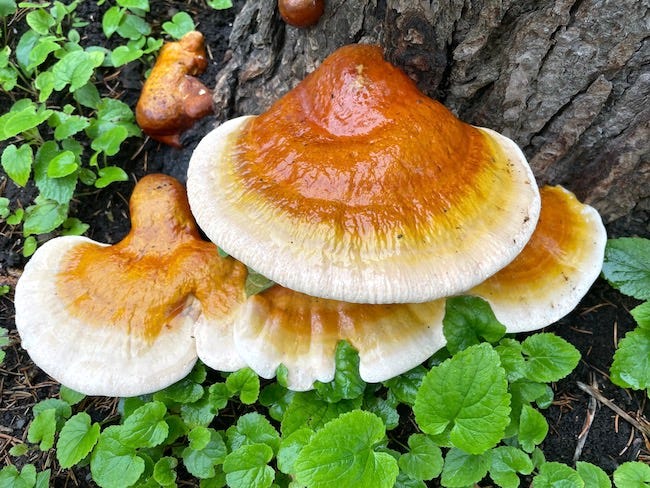
Reishi mushrooms and other Ganoderma species are also known to have favorable effects on triglycerides, LDL, HDL, VLDL, and total cholesterol. This is by way of ganoderic acid, a special triterpenoid that directly inhibits cholesterol biosynthesis in human hepatic cells.1 While not as powerful as statin drugs, ganoderic acid works by a different pathway, interrupting cholesterol production further down the line and therefore not impacting Coenzyme-Q10, the depletion of which causes the common side effects associated with prescription statins: muscle wasting, mitochondrial dysfunction, and impaired energy. Ganoderic acid is not water-soluble and may therefore only be extracted by alcohol or other solvents. It’s also what makes Reishi mushrooms taste bitter. The best source is a liquid extract, which may be more convenient than culinary mushrooms for regular intake. Catskill Fungi is proud to produce a high quality liquid extract of sustainably-foraged wild Reishi mushrooms, which provides all the medicinal components of the fruiting bodies in a combined alcohol-based extract, cold-water infusion, and hot-water decoction.
While not a magic bullet, mushrooms are important protectors of cholesterol integrity and helpers in maintaining a healthy lipid profile. Both directly and indirectly, they exert a positive influence through your digestive system, your immune system, and your detoxification system. Not only your blood vessels but your entire body benefits from the many gifts of mushrooms. Unlike drugs, mushrooms do not have side effects (unless there is an allergy). On the contrary, their benefits accumulate over time, building a relationship with our bodies slowly and patiently. Like the silent growth of mycelium throughout the forest, mushrooms have a way of growing into our bodies and our lives, integrating us with the natural world around us. It’s all good.
Yael Bernhard is production manager, writer, and mushroom walk leader for Catskill Fungi. She is also an integrative health & nutrition coach, with a special emphasis on herbal and fungal medicine; and a professional painter and illustrator – all of which she weaves together in her two Substacks: The Art of Health and Image of the Week.
Key references (see also footnotes below):
Oyster mushroom clinical review:
https://pubmed.ncbi.nlm.nih.gov/32316680/
Shiitake randomized controlled trial:
https://pubmed.ncbi.nlm.nih.gov/34375514/
Oyster mushroom human intervention:
https://www.sciencedirect.com/science/article/pii/S1756464610000630
Mechanistic animal study (oyster mushroom):
https://pubmed.ncbi.nlm.nih.gov/9221192/
Reishi meta-analysis (lipids):
https://pubmed.ncbi.nlm.nih.gov/38116485/
Review of mushroom bioactives:
Eritadenine and lipid metabolism:
https://pubmed.ncbi.nlm.nih.gov/12834276/
https://www.sciencedirect.com/science/article/pii/0006295274904341
https://www.sciencedirect.com/science/article/pii/S0022316622019368
https://www.sciencedirect.com/science/article/pii/0021915073900397
https://www.sciencedirect.com/science/article/pii/095528639400017G
Ergothioneine and oxidized cholesterol:
https://pubmed.ncbi.nlm.nih.gov/33067719/
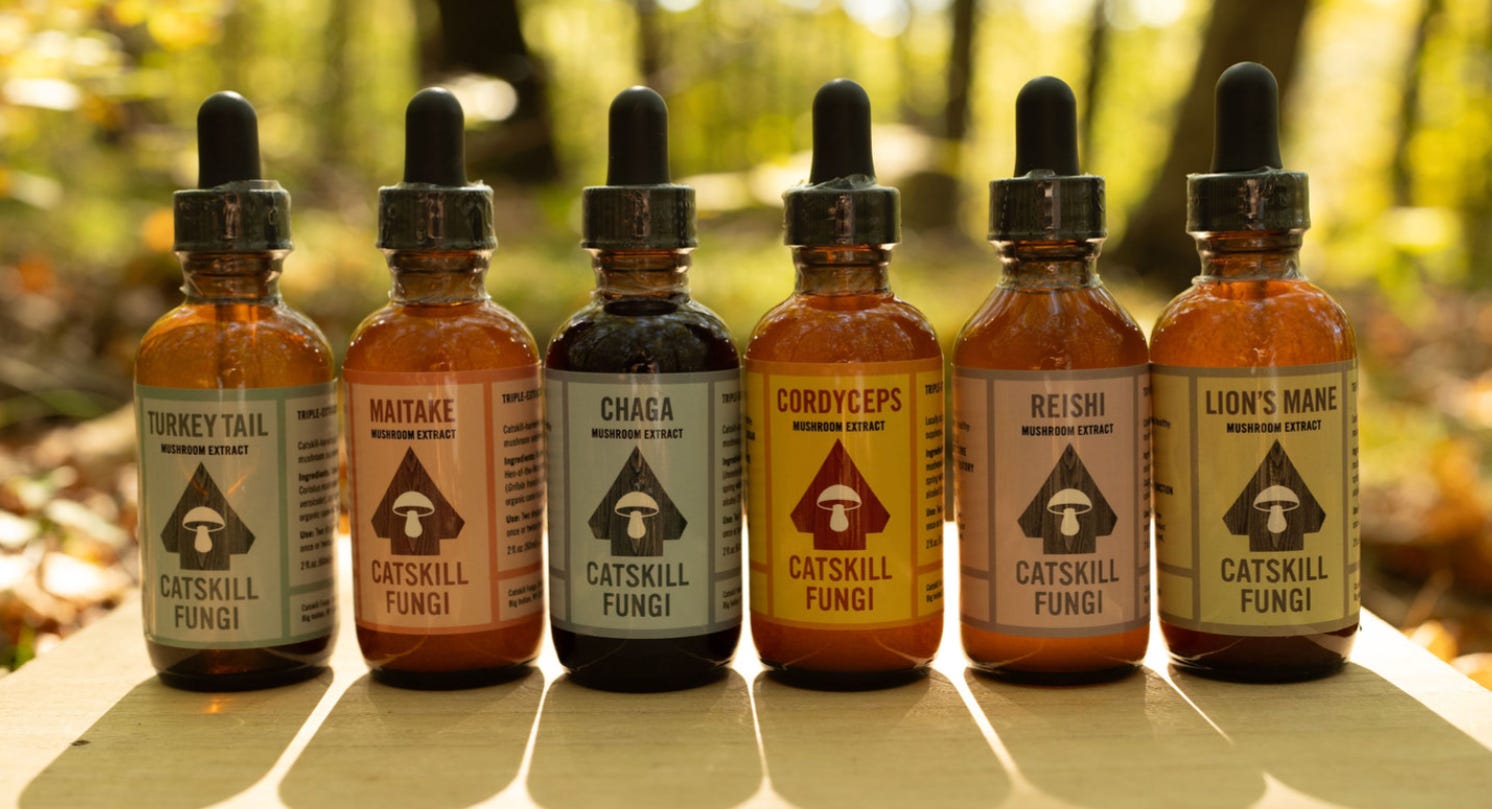
Catskill Fungi extracts are always available online.
Order here.